
.jpg)
When Professional Identity, Belonging, Ambition, Conscience, Loyalty and Self-Protection No Longer Point in the Same Direction
On the heels of diverse careers and personal stories, a team of interdisciplinary experts set out to discover what it takes to build a culture fit for humans, relevant to the generations coming through and conscious of the wider ecosystem it affects. The challenge? The growing complexity of modern enterprise. Their lab? Nature, from the impersonal confines of offices to the wild safety of the natural world. Their enquiry? What happens when powerful human drivers collide, professional identity, belonging, ambition, conscience, loyalty and self-protection, and what, if anything, can interrupt the heroic hyper-coping that modern corporate culture so often rewards? The result? A radically human-centred approach, steeped in evidence and grounded in the realities of imperfect systems. One that works alongside the policies, controls and legal frameworks designed to maintain order, while addressing what they cannot determine: how people actually respond when complexity, disruption and competing pressures collide.
Senior leaders are trained to project unwavering composure, decisive authority, and relentless stamina. For decades, governance models have assumed that an executive's internal drivers naturally point toward a single horizon: ambition fuels performance, loyalty earns belonging, professional identity protects the self, and conscience aligns with corporate purpose.
However, modern enterprise complexity exposes a silent, pervasive fracture. When an organisation faces acute pressure, these six core drivers stop pointing in the same direction:
When these forces diverge, leaders default to hyper-coping, the practice of quietly absorbing systemic friction, disguising physiological strain as professional stamina, and managing the gap in isolation. Hyper-coping is routinely mistaken for executive strength. In truth, it is an unmeasured tax paid by the individual for a dysregulated operating model.
When an executive's performance stalls, standard corporate development advises them to 'self-improve', to delegate more effectively, build emotional intelligence, or adapt their mindset. Empirical research reveals that forcing a driven executive to master complex behavioural transitions independently creates a severe performance trap.
In a randomised controlled trial tracking 202 managers across 13 organisations, Nicolau et al. (2025) investigated what occurs when leaders pursue complex developmental learning goals (such as emotional regulation, task delegation, or active listening) without external support:
The physiological mechanism is clear: acquiring new behavioural habits under daily enterprise stress imposes immense cognitive and self-regulatory demands. In the absence of an external scaffold, a structured environment providing psychological safety, critical reflection, and objective feedback, the executive's brain defaults to self-protection. Setbacks are experienced as personal failures rather than learning inputs, causing perceived capability to plummet. Ambition without external containment converts developmental effort into regulatory exhaustion.
As artificial intelligence enters decision-making and operational workflows, executive advisory literature emphasises the need for new governance frameworks. In his analysis of the Human–AI organisation, Prof. Sattar Bawany (2026) notes that integrating intelligent machines requires redesigning decision rights, work structures, and leadership capabilities. Could not agree more and would take it further though.
I find that traditional legal, compliance, and GRC (Governance, Risk, and Compliance) models I practiced in my previous professional life hit a hard ceiling: they attempt to govern human behaviour through documentation, registers, and codes of conduct. It is logical, but ineffective. Policies are necessary to standardise procedures; however, they cannot standardise human threat-response biology during acute crisis.
When an executive faces intense cognitive load, market ambiguity, or conflict, decision-making is not governed by policy manuals. It is governed by the leader's physiological and psychosocial baseline, implicit cognitive biases, emotions, and ingrained survival habits. An executive operating in chronic biological exhaustion does not execute corporate strategy; they execute self-preservation strategies disguised as strategy.
A meta-analysis of 18 studies found that coaching had positive effects across performance and skills, well-being, coping, work attitudes and goal-directed self-regulation (Theeboom et al., 2014). The largest observed effect was on goal-directed self-regulation, the processes through which people pursue goals, monitor progress and adjust their behaviour.
The implication is important: development is not only about adding knowledge or skills. It can strengthen the capacity of the person who must put them into practice.
For leaders, that distinction matters. Knowing what to do is one thing. Remaining able to think, adjust and act deliberately when pressure, competing interests and consequences enter the room is another.
When an executive's performance falters, the default organisational instinct is to send them to an isolated executive coach or offsite seminar. They polish the individual stone, then drop it back into the same unaligned corporate river. Empirical tracking exposes the limits of treating the executive as a closed system:
Executives seek support not for theoretical leadership issues, but because they face a live organisational problem in which their team dynamics, operating model, or stakeholder alignment has hit a wall. An isolated leader cannot out-regulate a dysregulated corporate environment. Changing the leader without aligning the surrounding container produces temporary awareness that decays upon contact with system inertia.
Homebridge Alliance (HBA) provides the Investigation and the Systemic Container required to bring professional identity, belonging, ambition, conscience, loyalty, and self-protection back into coherent alignment. HBA rejects the assumption that a performance or conduct issue belongs solely to the individual. Before proposing an intervention, the diagnostic isolates the exact constraint across three distinct layers:
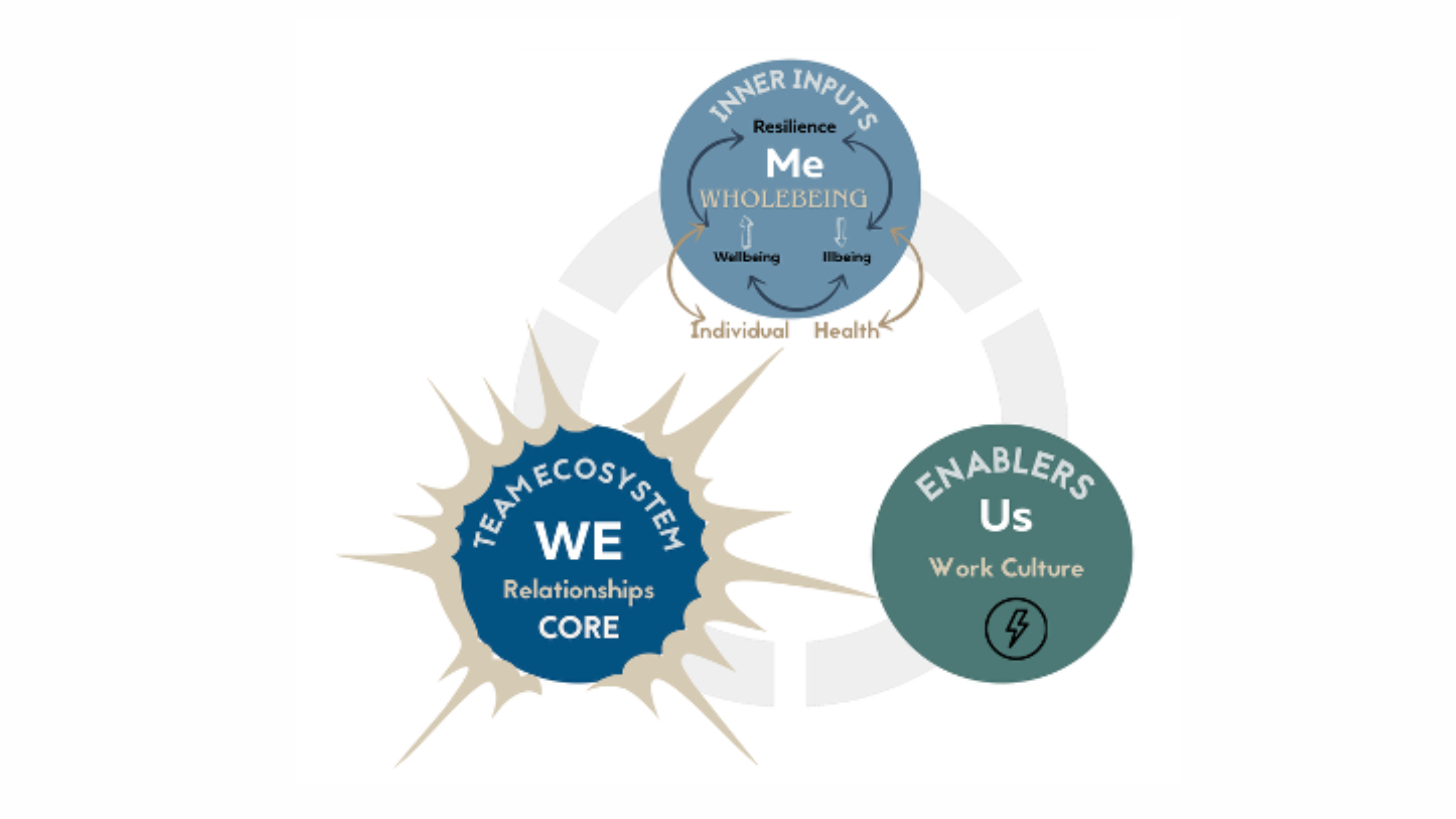
Through proprietary REINA® method, HBA develops the capacity to notice, regulate and choose, before habitual responses make the choice instead.
The work integrates cognitive, emotional and embodied awareness so that judgement remains available when ambition, conscience, loyalty, belonging and self-protection compete.
What one person can see, question or admit changes in the presence of status, trust, disagreement and consequence. We address live team friction (24.2% demand), helping to restore relational trust, and transform solitary execution into true collective intelligence.
People do not exercise judgement in a vacuum. Workload, authority, incentives, decision rights, conduct, fairness, change and informal norms continually shape what is noticed, challenged, rewarded, tolerated and left unsaid.
Through the HBA Growth Axis™, HBA partners with enterprises across a 12-week evidence-to-change cycle. We evaluate the structural, physical, and organisational conditions shaping daily work, co-designing environmental adjustments and systematically re-measuring behavioural progress across the system rather than placing the burden entirely on the individual.
We deliver through experience, moving nature-based learning beyond discretionary off-sites and positioning it as a structural component of leadership capability.
Major adult-learning research demonstrates that transformative learning occurs when assumptions are challenged through the iterative integration of experience and reflection. While traditional corporate development often treats outdoor programs as simple skill training or team-building, nature-based environments foster deep cultural, reflective, and perspective-shifting learning.
This directly intersects with David Kolb's Experiential Learning Theory (1984), which establishes that meaningful behavioural change occurs through a four-stage cycle:
%20(1).png)
This learning cycle mirrors Jack Mezirow's Transformative Learning Theory, where individuals re-examine core beliefs through disorienting experiences. However, transformation does not always require a catastrophic crisis; it frequently emerges from gradual emotional tensions and subtle destabilisation. Our interventions proactively build capacity by gently interrupting reactive coping habits before a crisis forces them to break.
Our interventions are not a motivational programme, nor do they attempt to manufacture ethical commitment. They examine mechanics of behavioural psychology and the exact conditions under which human behaviour activates under pressure.
Many leaders today operate inside what has effectively become an operational labyrinth, a dense maze of targets, regulatory obligations, individual responsibility, technological shifts, and reputational exposure. The environment is in constant motion: markets reconfigure, unexpected challenges emerge, and orientation gradually weakens under chronic cognitive load.
Yet organisations continue to treat the human system as if it were a Formula 1 machine, engineered for uninterrupted performance, continuous acceleration, and infinite endurance.
Even a Formula 1 car cannot operate that way. It requires calibration, pit stops, realignment, refuelling, and inspection to remain safe and competitive on the track.
Human systems are far more complex. Leaders are not machines or software scripts. They are human beings carrying biological strain, responsibility, and personal histories that inevitably shape judgment under pressure. When organisations demand perpetual performance inside a volatile labyrinth, attention narrows, defensive shortcuts activate, and governance frameworks begin to fail exactly when they are needed most.
Our interventions interrupt that cycle.
By stepping outside the operational labyrinth into nature-based experiential learning, leaders complete the full cycle of reflection and active experimentation. They regain orientation, recalibrate their nervous system, and restore the cognitive and somatic conditions required to navigate ambiguity, where judgment remains the only reliable compass.
HBA works at the intersections: where personal capacity meets relationship, relationship meets power, and organisational conditions change what people are able, or willing, to do.
When professional identity, belonging, ambition, conscience, loyalty, and self-protection stop pointing in the same direction, a leader does not need another lecture on performance, nor another isolated workshop. They need a structured space to see what they cannot see alone, and an enterprise container capable of supporting who they are becoming.
As artificial intelligence automates analytical and procedural execution across the modern enterprise, the ultimate competitive advantage of the human leader will not be processing speed or stamina. It will be the depth of their presence, the somatic stability of their judgment under due pressure, and the strength of the relational trust they build around them.
The rules, compliance frameworks, and policies are necessary. The future belongs to those who cultivate the human and systemic capacity to uphold their true intent.